
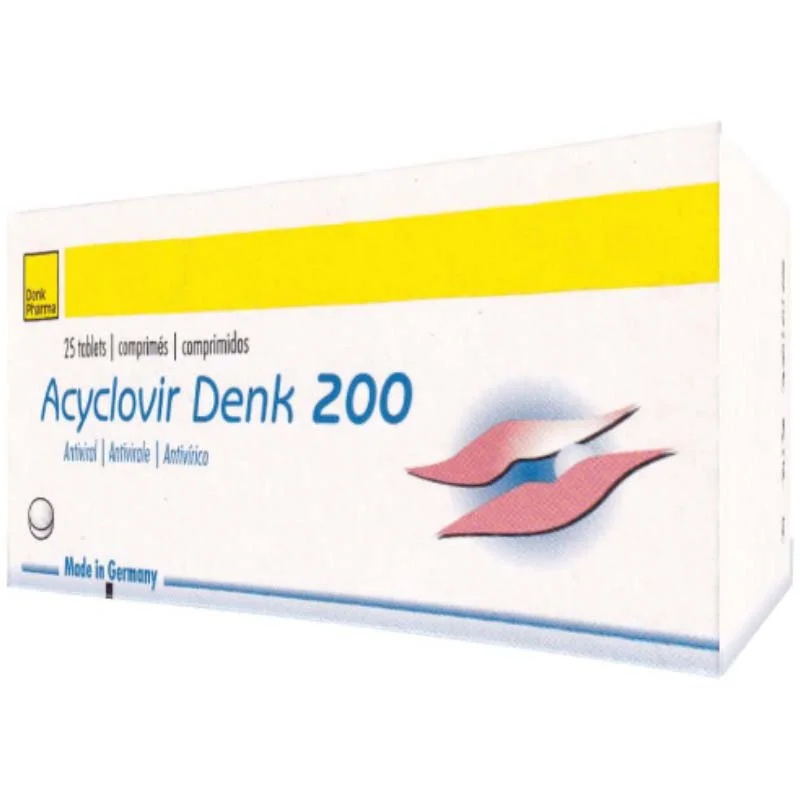
Ացիկլովիր Դենկ
Գտնել առցանց դեղատներում
5 դեղատուն






Ացիկլովիր Դենկ Ազդեցությունը
Aciclovir is a pharmacologically inactive substance which does not become an antiviral agent until after penetration into a cell infected with herpes simplex viruses (HSV) or varicella zoster viruses (VZV). This activation of aciclovir is catalysed by HSV- or VZV thymidine kinase, an enzyme that viruses particularly need for their replication. In simple terms, one can say that the virus synthesises its own antiviral agent. In more detail, the following steps occur: 1. Aciclovir preferentially penetrates herpes-infected cells. 2. The viral thymidine kinase present in these cells phosphorylates aciclovir to aciclovir monophosphate. 3. Cellular enzymes convert aciclovir monophosphate to aciclovir triphosphate, the actual antiviral agent. 4. Aciclovir triphosphate has a 10-30 times greater affinity to viral DNA polymerase than cellular DNA polymerase and hence selectively inhibits activity of the viral enzyme. 5. Furthermore, the viral DNA polymerase incorporates aciclovir into the viral DNA, resulting in a chain termination during DNA synthesis. Overall, these individual steps lead to a highly effective reduction in viral production. In the plaque reduction test, an ED50 inhibition value of 0.1 µmol aciclovir/l was measured for HSV-infected vero cells (= cell cultures from the renal parenchyma of the green African monkey), whereas an ED50 value of 300 µmol aciclovir/l was required to prevent the growth of non-infected vero cell cultures. Hence, an inhibitory concentration ratio of up to 3000 is determined for cell cultures. Spectrum of activity in vitro Very sensitive: herpes simplex virus types I and II, varicella zoster virus. Sensitive: Epstein-Barr virus. Partially sensitive to resistant: cytomegalovirus. Resistant: RNA viruses, adenoviruses, pox viruses Pharmacokinetic properties Absorption, plasma levels Aciclovir is only partially absorbed from the gastrointestinal tract. After repeated oral administration of 200 mg, 400 mg and 800 mg aciclovir at an interval of 4 hours 5 times a day, mean peak plasma levels determined at steady state are 3.02 ± 0.5 µmol/l (200 mg), 5.21 ± 1.32 µmol/l (400 mg) and 8.16 ± 1.98 µmol/l (800 mg), respectively. These values are reached after about 1.5 ± 0.6 hours. The corresponding plasma baseline values are respectively 1.61 ± 0.3 µmol/l (200 mg), 2.59 ± 0.53 µmol/l (400 mg) and 4.0 ± 0.72 µmol/l (800 mg) about 4 hours after oral administration of aciclovir. 24 hours after discontinuation of aciclovir tablets, aciclovir is no longer detectable in the body. In immunosuppressed children aged 3–11 years who were orally administered aciclovir at doses of 400 mg, equivalent to 300-650 mg aciclovir/m2 BSA, 5 times daily, mean peak plasma levels of 5.7–15.1 µmol/l were determined. In infants aged 1-6 weeks after oral administration of 600 mg aciclovir/m2 BSA every 6 hours, peak plasma levels of 17.3 and 8.6 µmol/l were respectively measured. Based on the biexponential progression of aciclovir kinetics, it can be concluded that aciclovir reaches tissue and the organs at high concentrations, from whence elimination is slow. The steady-state volume of distribution is 50 ± 8.7 l/1.73 m2 in adults and 28.8 ± 9.3 l/1.73 m2 in neonates and infants up to 3 months. Values between 9 and 33% have been determined for protein binding. Distribution within the organs Animal trials confirm that, compared to the serum level, higher aciclovir levels are reached in the intestines, kidney, liver and lung, whilst lower levels are reached in the muscle, heart, brain, ovaries and testes of the animals. Post-mortem investigations in humans have revealed that aciclovir accumulates in saliva, vaginal secretions, in the vesicular fluid of herpes blisters and some organs. 50% of the corresponding serum concentrations are reached in the cerebrospinal fluid. Metabolism and elimination In patients with healthy kidneys, aciclovir is renally eliminated in unchanged form (62–91%) and as 9-carboxymethoxy methyl guanine (10–15%). After IV administration of aciclovir, plasma half-lives (t1/2ß) of 2.87 ± 0.76 hours were determined for adults and 4.1 ± 1.2 hours for neonates and infants up to 3 months. Aciclovir undergoes both glomerular filtration and tubular secretion. If aciclovir is given one hour after administration of 1 g probenecid, the plasma half-life (t1/2ß) is prolonged by 18% and the area under the plasma concentration-time curve is increased by 40%. With a bioavailability of about 20%, approximately 80% of the total aciclovir dose is excreted with the faeces. In patients with chronic renal insufficiency, the mean plasma half-life is about 19.5 hours. The mean plasma half-life during haemodialysis is 5.7 hours. During haemodialysis, aciclovir plasma levels fall by about 60%. In patients with impaired renal function, there is a risk of accumulation at creatinine clearance values of 10 ml/min/1.73 m2 at a dosage of 5 x 200 mg/day. Hence, a dose reduction at this value or below is indicated.
Ացիկլովիր Դենկ Բաղադրությունը
Active substance: Aciclovir
Ացիկլովիր Դենկ Ցուցումները
Acyclovir Denk 200 is indicated for the treatment of herpes simplex virus (HSV) infections of the skin and mucous membranes including initial and recurrent genital herpes (excluding neonatal HSV and severe HSV infections in immunocompromised children).
Ացիկլովիր Դենկ Հակացուցումները
Do not take Acyclovir Denk 200 • if you are allergic to aciclovir, valaciclovir or any of the other ingredients of this medicine. Warnings and precautions Talk to your doctor or pharmacist before taking Acyclovir Denk 200. Take special care with Acyclovir Denk 200 • if your kidney function is impaired, a dose adjustment is required. The kidney function of elderly patients is often impaired. For this reason, your doctor may regularly check your kidney function. • if your kidney function is impaired or your urine production is severely reduced, Acyclovir Denk 200 should not be taken to prevent infections. • if you are taking Acyclovir Denk 200 at high doses, you should ensure that you drink plenty of liquids. • if you have a severe immune system disorder
Ացիկլովիր Դենկ Կողմնակի ազդեցությունները
Major side effects or signs that you should look out for, and what to do if you are affected If any of the following symptoms of severe allergic reactions occur, you must stop taking this medicine and seek medical assistance immediately: • sudden difficulties in breathing, speaking or swallowing, shortness of breath • weakness, drop in blood pressure • swelling of the lips, tongue, face or throat. Severe allergic reactions (anaphylactic reactions, angioedema, dyspnoea) are rare. If any of the following signs occur that affect the nervous system, you must stop taking this medicine and seek medical assistance immediately: general physical restlessness, states of confusion, trembling, movement and speech disorders, delusion, depersonalization, seizures, pathological brain changes, insomnia and impaired consciousness, including loss of consciousness These side effects, which wore off when the medicine was discontinued, have usually occurred in patients with damaged kidney function or other diseases that promote the onset of these unwanted effects. These side effects are very rare.Furthermore, the following side effects can occur Common: • dizziness, headache • nausea, vomiting, diarrhea and abdominal pain • itching, skin rash, increased sensitivity to sunlight Uncommon: • nettle rash • tiredness, fever • diffuse hair loss has been reported with the use of aciclovir, although the relationship is unclear Rare: • increase in certain blood test results (liver values, kidney values, bile pigment, urea) Very rare: • decrease in the number of red or white blood cells, decrease in the number of platelets • acute kidney failure, kidney pain • liver inflammation (hepatitis), jaundice Reporting of side effects If you get any side effects, talk to your doctor or pharmacist. This includes any possible side effects not listed in this leaflet. By reporting side effects, you can help provide more information on the safety of this medicine.
Ացիկլովիր Դենկ Փոխազդեցությունները
Tell your doctor or pharmacist if you are taking, have recently taken or might take any other medicines. The effect of Acyclovir Denk 200 will be prolonged if you are also taking • probenecide (used to treat high uric acid levels in the blood) • cimetidine (used to reduce stomach acid production) • mycophenolate mofetil (used to prevent transplant rejection reactions). However, no dose adjustment is necessary.
Ացիկլովիր Դենկ Գերադասումը
If you take more Acyclovir Denk 200 than you should Toxicity is not to be expected after overdose with Acyclovir Denk 200. No signs of toxicity developed after a single dose of 5 g of aciclovir. No information is available on higher single doses. In case of overdose and if more side-effects occur, or if you are unsure, please consult your physician. If you forget to take Acyclovir Denk 200 Do not take a double dose to make up for a forgotten dose. Continue treatment as prescribed. If you have forgotten several doses or have not taken enough Acyclovir Denk 200, please consult your doctor. If you stop taking Acyclovir Denk 200 Even if you are feeling better, you should keep taking Acyclovir Denk 200 until the end of your treatment, so as not to jeopardise its success. If you are not sure, e.g. due to side effects that occur, please talk to your doctor before deciding on your own to suspend treatment or ending it before you should. If you have any further questions on the use of this medicine, ask your doctor or pharmacist.
Ացիկլովիր Դենկ Կիրառման եղանակ և դեղաչափերը
Always take this medicine exactly as your doctor or pharmacist has told you. Check with your doctor or pharmacist if you are not sure. The recommended dose is: Use in adults For herpes simplex infections: One single dose of 1 tablet (200 mg aciclovir) 5 times throughout the day at intervals of 4 hours. For prophylaxis against severe forms and very frequently recurring genital herpes simplex infections: Immunologically healthy patients are given a single dose of 1 tablet (200 mg aciclovir) 4 times daily at intervals of 6 hours. In individual cases, effective prophylaxis can also be achieved with a dosage of 1 tablet (200 mg aciclovir) 3 times daily at intervals of 8 hours or twice daily 1 tablet (200 mg aciclovir) at intervals of 12 hours. For prophylaxis, immunosuppressed patients are given a single dose of 1 tablet (200 mg aciclovir) 4 times daily at intervals of 6 hours. Severely immunosuppressed patients, e.g. after organ transplants, can be administered a single dose of 2 tablets (400 mg aciclovir) 4 times daily at intervals of 6 hours. Use in children and adolescents For the treatment of herpes simplex infections, the adult dose is given to children over 2 years and half the adult dose to children below 2 years. Use in patients with renal insufficiency (Refer to “Take special care with Acyclovir Denk 200”). In case of impaired kidney function, which often occurs in elderly patients, a smaller dose of aciclovir may be sufficient. The dose may be adjusted according to the kidney function values by the physician. Method of administration The tablets should be swallowed whole with adequate liquid (one glass of water) after meals. Especially in patients with impaired renal function, adequate fluid intake should be ensured during treatment. Special note Acyclovir Denk 200 should be administered as early as possible after the first symptoms of an infection occur. Particularly in case of recurring herpes simplex infections the medicine should be taken upon the first signs of a renewed infection (i.e. itching, tension, first blisters). Duration of treatment The treating doctor will decide on the duration of treatment. For herpes simplex infections, the duration of treatment is 5 days. However, this can be extended depending on the patient’s clinical status. For the prevention of herpes simplex infections in immunologically healthy patients, the duration of treatment is dependent on the severity of disease and frequency of recurrence. However, it should not exceed a period of 6 – 12 months. For prophylaxis against herpes simplex infections in severely immunosuppressed patients, the duration of administration is determined by the severity of immunosuppression and should be determined by the physician.
Ացիկլովիր Դենկ Պահպանման պայմանները
Store below 25 °C. • Do not throw away any medicines via wastewater. Ask your pharmacist how to throw away medicines
Սա դեղի նկարագրություն է տեղեկատվական նպատակով և չի փոխարինում պաշտոնական հրահանգին։ Ընդունման սխեման որոշում է բժիշկը։