
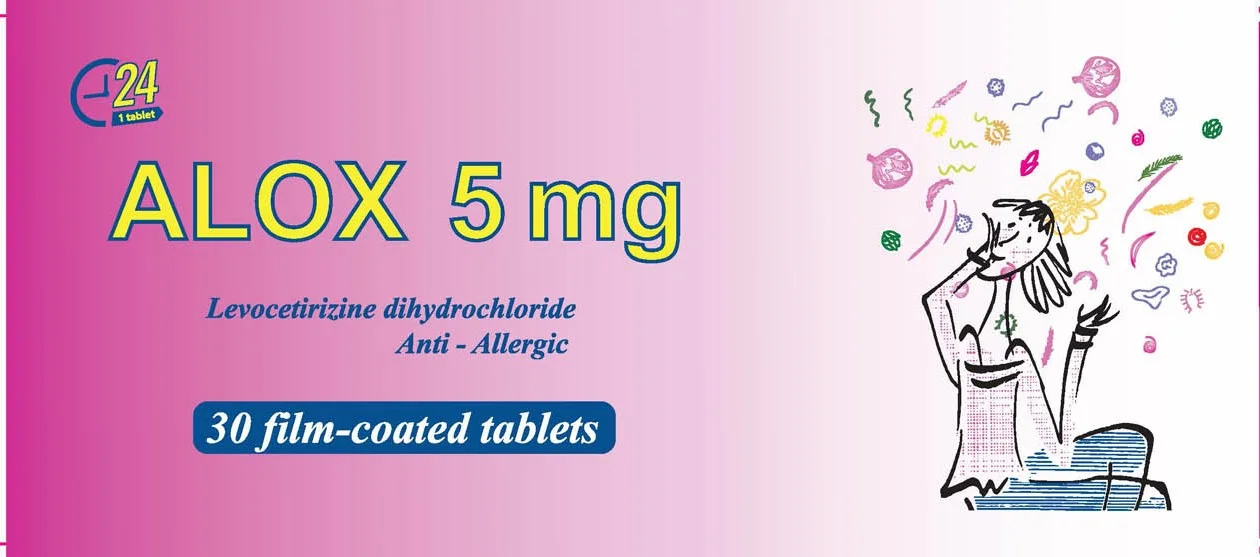
Ալոկս
Գտնել առցանց դեղատներում
1 դեղատուն


Ալոկս Ազդեցությունը
Pharmacotherapeutic group: antihistamines for systemic use, piperazine derivatives; ATC code: R06A E09 Mechanism of action Levocetirizine, the (R) enantiomer of cetirizine, is a potent and selective antagonist of peripheral H1- receptors. Binding studies revealed that levocetirizine has high affinity for human H1-receptors (Ki = 3.2 nmol/l). Levocetirizine has an affinity 2-fold higher than that of cetirizine (Ki = 6.3 nmol/l). Levocetirizine dissociates from H1-receptors with a half-life of 115 ± 38 min. After single administration, levocetirizine shows a receptor occupancy of 90% at 4 hours and 57% at 24 hours. Pharmacodynamic studies in healthy volunteers demonstrate that, at half the dose, levocetirizine has comparable activity to cetirizine, both in the skin and in the nose. Pharmacodynamic effects The pharmacodynamic activity of levocetirizine has been studied in randomised, controlled trials: In a study comparing the effects of levocetirizine 5 mg, desloratadine 5 mg, and placebo on histamineinduced wheal and flare, levocetirizine treatment resulted in significantly decreased wheal and flare formation which was highest in the first 12 hours and lasted for 24 hours, (p<0.001) compared with placebo and desloratadine. The onset of action of levocetirizine 5 mg in controlling pollen-induced symptoms has been observed at 1 hour post drug intake in placebo controlled trials in the model of the allergen challenge chamber. In vitro studies (Boyden chambers and cell layers techniques) show that levocetirizine inhibits eotaxininduced eosinophil transendothelial migration through both dermal and lung cells. A pharmacodynamic experimental study in vivo (skin chamber technique) showed three main inhibitory effects of levocetirizine 5 mg in the first 6 hours of pollen-induced reaction, compared with placebo in 14 adult patients: inhibition of VCAM-1 release, modulation of vascular permeability and a decrease in eosinophil recruitment.
Ալոկս Բաղադրությունը
Each film-coated tablet contains 5 mg levocetirizine dihydrochloride Excipient(s) with known effect: Each film-coated tablet contains 64.0 mg lactose monohydrate.
Ալոկս Ցուցումները
Alox 5 mg film-coated tablets are indicated in the symptomatic treatment of allergic rhinitis (including persistent allergic rhinitis) and urticaria in adults and children aged 6 years and above.
Ալոկս Հակացուցումները
Hypersensitivity to the active substance, to cetirizine, to hydroxyzine, to any other piperazine derivatives Severe renal impairment at less than 10 ml/min creatinine clearance.
Ալոկս Կողմնակի ազդեցությունները
Clinical studies Adults and adolescents above 12 years of age In therapeutic studies in women and men aged 12 to 71 years, 15.1% of the patients in the levocetirizine 5 mg group had at least one adverse drug reaction compared to 11.3% in the placebo group. 91.6 % of these adverse drug reactions were mild to moderate. In therapeutic trials, the dropout rate due to adverse events was 1.0% (9/935) with levocetirizine 5 mg and 1.8% (14/771) with placebo. Clinical therapeutic trials with levocetirizine included 935 subjects exposed to the medicinal product at the recommended dose of 5 mg daily Further uncommon incidences of adverse reactions (uncommon ≥1/1,000 to <1/100) like asthenia or abdominal pain were observed. The incidence of sedating adverse drug reactions such as somnolence, fatigue, and asthenia was altogether more common (8.1 %) under levocetirizine 5 mg than under placebo (3.1%). Paediatric population In two placebo-controlled studies in paediatric patients aged 6-11 months and aged 1 year to less than 6 years, 159 subjects were exposed to levocetirizine at the dose of 1.25 mg daily for 2 weeks and 1.25 mg twice daily respectively. The following incidence of adverse drug reactions was reported at rates of 1% or greater under levocetirizine or placebo. In children aged 6-12 years double blind placebo controlled studies were performed where 243 children were exposed to 5 mg levocetirizine daily for variable periods ranging from less than 1 week to 13 weeks. The following incidence of adverse drug reactions was reported at rates of 1% or greater under levocetirizine or placebo. Post-marketing experience Adverse reactions from post-marketing experience are per System Organ Class and per frequency. The frequency is defined as follows: very common (≥1/10); common (≥1/100 to <1/10); uncommon (≥1/1,000 to <1/100); rare (≥1/10,000 to <1/1,000); very rare (<1/10,000), not known (cannot be estimated from the available data).
Ալոկս Փոխազդեցությունները
No interaction studies have been performed with levocetirizine (including no studies with CYP3A4 inducers); studies with the racemate compound cetirizine demonstrated that there were no clinically relevant adverse interactions (with antipyrine, azithromycin, cimetidine, diazepam, erythromycin, glipizide, ketoconazole and pseudoephedrine). A small decrease in the clearance of cetirizine (16%) was observed in a multiple dose study with theophylline (400 mg once a day); while the disposition of theophylline was not altered by concomitant cetirizine administration. In a multiple dose study of ritonavir (600 mg twice daily) and cetirizine (10 mg daily), the extent of exposure to cetirizine was increased by about 40% while the disposition of ritonavir was slightly altered (-11%) further to concomitant cetirizine administration. The extent of absorption of levocetirizine is not reduced with food, although the rate of absorption is decreased. In sensitive patients the concurrent administration of cetirizine or levocetirizine and alcohol or other CNS depressants may cause additional reductions in alertness and impairment of performance.
Ալոկս Գերադասումը
Symptoms Symptoms of overdose may include drowsiness in adults. In children, agitation and restlessness may initially occur, followed by drowsiness. Management of overdoses There is no known specific antidote to levocetirizine. Should overdose occur, symptomatic or supportive treatment is recommended. Gastric lavage may be considered shortly after ingestion of the drug. Levocetirizine is not effectively removed by haemodialysis
Ալոկս Կիրառման եղանակ և դեղաչափերը
Posology Adults and adolescents 12 years and above: The daily recommended dose is 5 mg (1 film-coated tablet). Elderly Adjustment of the dose is recommended in elderly patients with moderate to severe renal impairment (see Renal impairment below). Renal impairment The dosing intervals must be individualised according to renal function. Refer to the following table and adjust the dose as indicated. To use this dosing table, an estimate of the patient's creatinine clearance (CLcr) in ml/min is needed In paediatric patients suffering from renal impairment, the dose will have to be adjusted on an individual basis taking into account the renal clearance of the patient and his body weight. There are no specific data for children with renal impairment. Hepatic impairment No dose adjustment is needed in patients with solely hepatic impairment. In patients with hepatic impairment and renal impairment, adjustment of the dose is recommended (see Renal impairment above). Paediatric population Children aged 6 to 12 years The daily recommended dose is 5 mg (1 film-coated tablet). For children aged 2 to 6 years no adjusted dosage is possible with the film-coated tablet formulation. It is recommended to use a paediatric formulation of levocetirizine. Method of administration The film-coated tablet must be taken orally, swallowed whole with liquid and may be taken with or without food. It is recommended to take the daily dose in one single intake. Duration of use: Intermittent allergic rhinitis (symptoms experienced for less than four days a week or for less than four weeks a year) has to be treated according to the disease and its history; it can be stopped once the symptoms have disappeared and can be restarted again when symptoms reappear. In case of persistent allergic rhinitis (symptoms experienced for more than four days a week or for more than four weeks a year), continuous therapy can be proposed to the patient during the period of exposure to allergens. There is clinical experience with the use of levocetirizine for treatment periods of at least 6 months. In chronic urticaria and chronic allergic rhinitis, there is clinical experience of use of cetirizine (racemate) for up to one year.
Ալոկս Պահպանման պայմանները
Store in the original package, below 30°C.
Սա դեղի նկարագրություն է տեղեկատվական նպատակով և չի փոխարինում պաշտոնական հրահանգին։ Ընդունման սխեման որոշում է բժիշկը։